



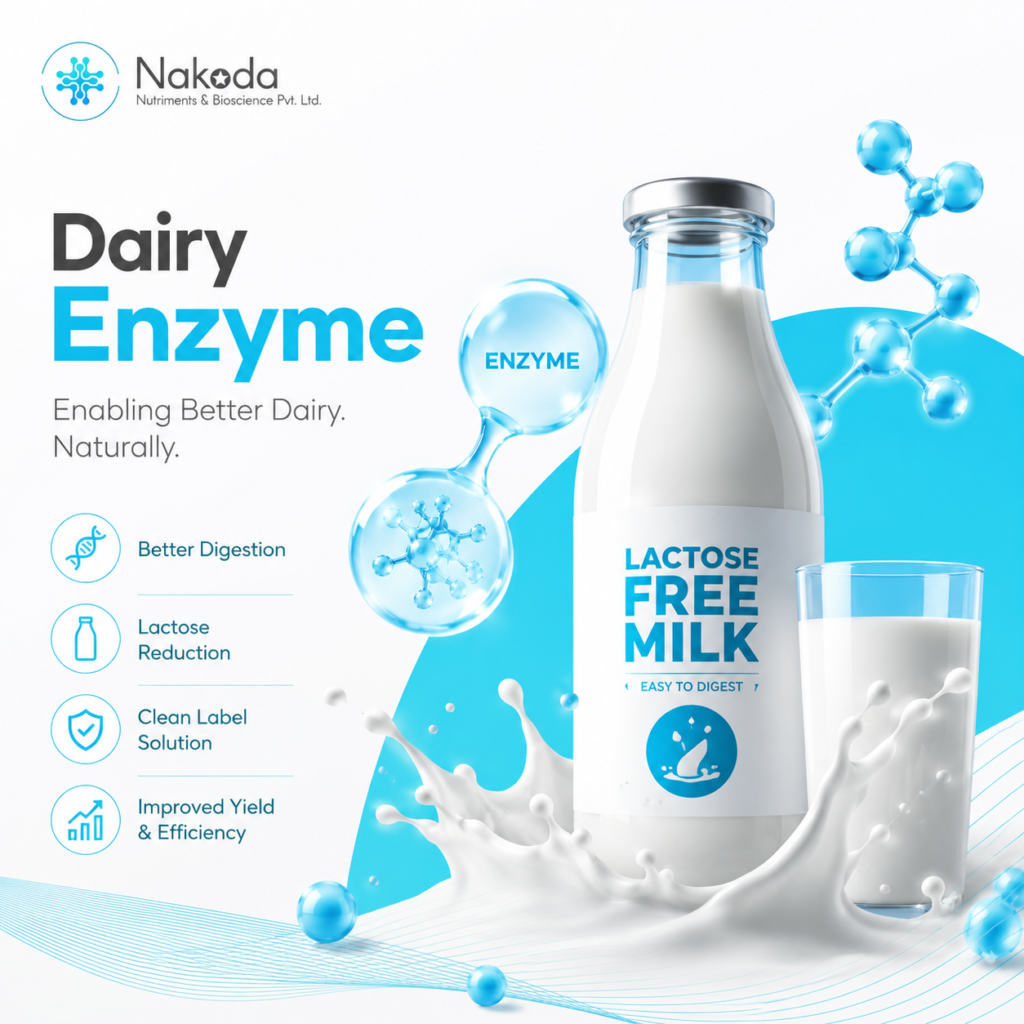
Dairy Enzyme Solutions
Nakoda Nutriments & Bioscience Pvt. Ltd. offers a comprehensive range of high-performance dairy enzymes designed to improve processing efficiency, product quality, and production consistency across a wide range of dairy applications. Our enzyme portfolio supports manufacturers in optimizing yield, enhancing functionality, improving digestibility, and delivering consistent product quality while meeting industry and regulatory standards. Backed by technical expertise and application support, we help dairy processors achieve greater operational efficiency and product innovation.
Applications
- Milk Processing
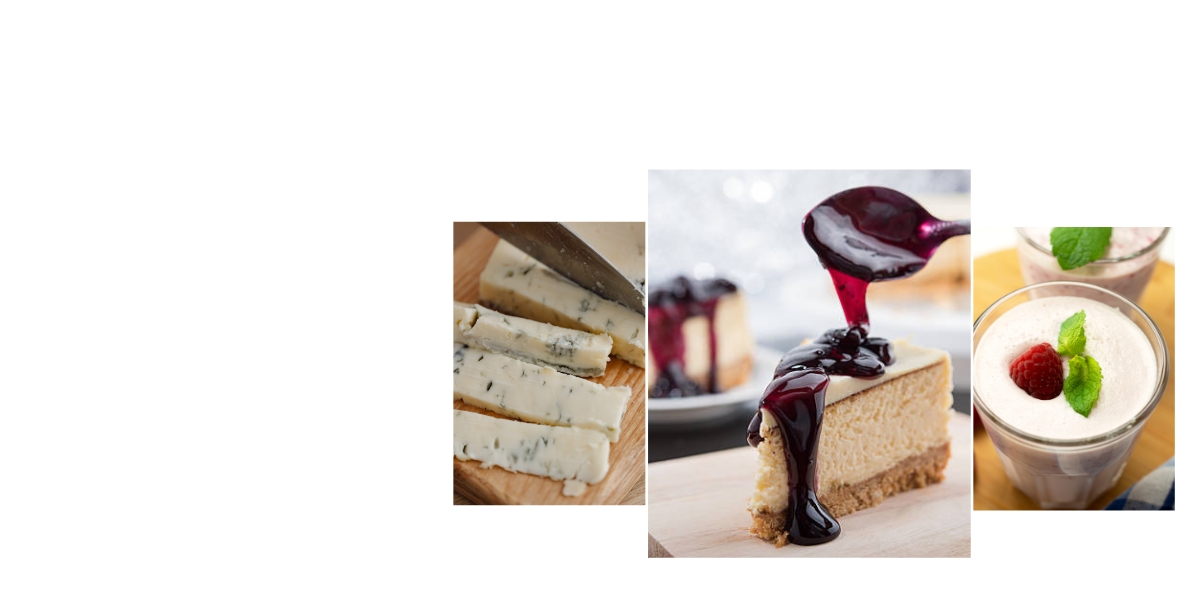
- Cheese Manufacturing
- Yogurt & Fermented Dairy Products
- Lactose-Free Milk & Dairy Products
- Ice Cream & Frozen Desserts
- Dairy Ingredients & Whey Processing
Types of Dairy Enzymes
Different dairy processes require different enzymes, each serving a unique purpose in manufacturing. Lactase is one of the most widely used enzymes because it breaks down lactose into glucose and galactose, making milk easier to digest for lactose-intolerant consumers. It also naturally enhances sweetness, reducing the need for added sugar in lactose-free products.
Chymosin, commonly known as rennet, is essential in cheese production. It coagulates milk proteins to form curd, resulting in improved cheese yield, better moisture retention, consistent texture, and enhanced processing efficiency. It is widely used in the production of mozzarella, cheddar, gouda, paneer, and processed cheese.
Lipase is responsible for breaking down milk fats into fatty acids that contribute to the development of rich and distinctive cheese flavors. It is particularly valuable in Italian-style cheeses, blue cheeses, and premium specialty cheeses where accelerated flavor development is desired.
Protease modifies milk proteins to improve digestibility, enhance texture, and optimize functional properties. It is commonly used in protein beverages, infant nutrition products, and high-protein dairy formulations.
Catalase removes residual hydrogen peroxide that may remain after sterilization or preservation processes. This improves product safety, enhances stability, and ensures cleaner dairy processing operations.
Benefits of Dairy Enzymes
The use of dairy enzymes offers significant advantages throughout the manufacturing process. One of the primary benefits is improved production efficiency, as enzymes accelerate natural biochemical reactions and reduce overall processing time. This enables manufacturers to increase productivity without compromising quality.
Enzymes also contribute to higher product yields, particularly in cheese manufacturing, where optimized milk coagulation reduces losses and increases the amount of finished product obtained from the same volume of milk. Improved yield directly contributes to greater profitability.
Another important benefit is enhanced texture and mouthfeel. Enzymes help create smoother, creamier, and more consistent dairy products, improving the overall sensory experience for consumers. Flavor development is also enhanced, especially in aged and specialty cheeses where lipase and protease create complex flavor profiles.
The growing demand for lactose-free dairy products has further increased the importance of lactase enzymes. These enzymes allow manufacturers to produce milk, yogurt, and ice cream suitable for lactose-intolerant consumers while maintaining excellent taste and nutritional quality.
From a business perspective, enzymes reduce production costs by improving raw material utilization, minimizing waste, shortening processing cycles, and supporting efficient large-scale manufacturing. They also ensure consistent batch-to-batch quality, enabling dairy processors to maintain high production standards.
Support for Product Innovation
Enzymes make it possible to develop:
- High-protein dairy products
- Lactose-free milk
- Functional beverages
- Premium cheeses
- Reduced-sugar dairy products
Applications Across the Dairy Industry
Dairy enzymes are widely used in:
- Milk Processing
- Cheese Manufacturing
- Yogurt Production
- Ice Cream Manufacturing
- Whey Processing
- Dairy Desserts
- Butter Production
- Dairy Protein Ingredients
- Functional Dairy Products
- Fermented Dairy Products
Advantages of Dairy Enzymes
- Increased manufacturing efficiency
- Higher production yield
- Improved product quality
- Enhanced flavor and texture
- Reduced processing time
- Better digestibility
- Consistent product performance
- Supports lactose-free formulations
- Environmentally friendly processing
- Reduced production losses
- Better return on investment
- Suitable for large-scale production
Limitations of Dairy Enzymes
While dairy enzymes offer numerous advantages, manufacturers should consider the following:
Temperature Sensitivity
Enzymes perform best within specific temperature ranges. Excessive heat can reduce their activity.
pH Dependency
Each enzyme has an optimal pH. Incorrect conditions can affect performance.
Precise Dosage Required
Overdosing or underdosing may lead to inconsistent product quality or processing issues.
Storage Conditions
Enzymes require proper storage to maintain activity throughout their shelf life.
Process Optimization
Successful implementation often requires validation and optimization for each product and manufacturing process.
Best Practices for Using Dairy Enzymes
- Select the right enzyme for the intended application.
- Follow recommended dosage guidelines.
- Maintain optimal temperature and pH during processing.
- Store enzymes according to supplier recommendations.
- Validate enzyme performance through production trials.
- Work with experienced technical experts to optimize formulations.
Why Choose Nakoda Nutriments & Bioscience Pvt. Ltd.?
Nakoda Nutriments & Bioscience Pvt. Ltd. provides high-quality dairy enzyme solutions supported by technical expertise and application guidance. We help dairy manufacturers improve processing efficiency, enhance product quality, and develop innovative dairy products tailored to evolving market demands.
Our Support Includes
- Technical consultation
- Application development
- Process optimization
- Product trials
- Regulatory documentation
- Certificate of Analysis (CoA)
- Technical Data Sheet (TDS)
- Material Safety Data Sheet (MSDS/SDS)
- Traceability support
Conclusion
Dairy enzymes have become indispensable in modern dairy processing. They improve efficiency, increase yield, enhance flavor and texture, and enable the production of value-added products such as lactose-free milk and premium cheeses. By selecting the appropriate enzyme and optimizing processing conditions, manufacturers can achieve consistent quality, reduce operational costs, and stay competitive in a rapidly evolving dairy market.
Whether producing milk, cheese, yogurt, ice cream, or specialized dairy products, the right enzyme solution can significantly improve both production performance and product excellence.