Journey Of Milk
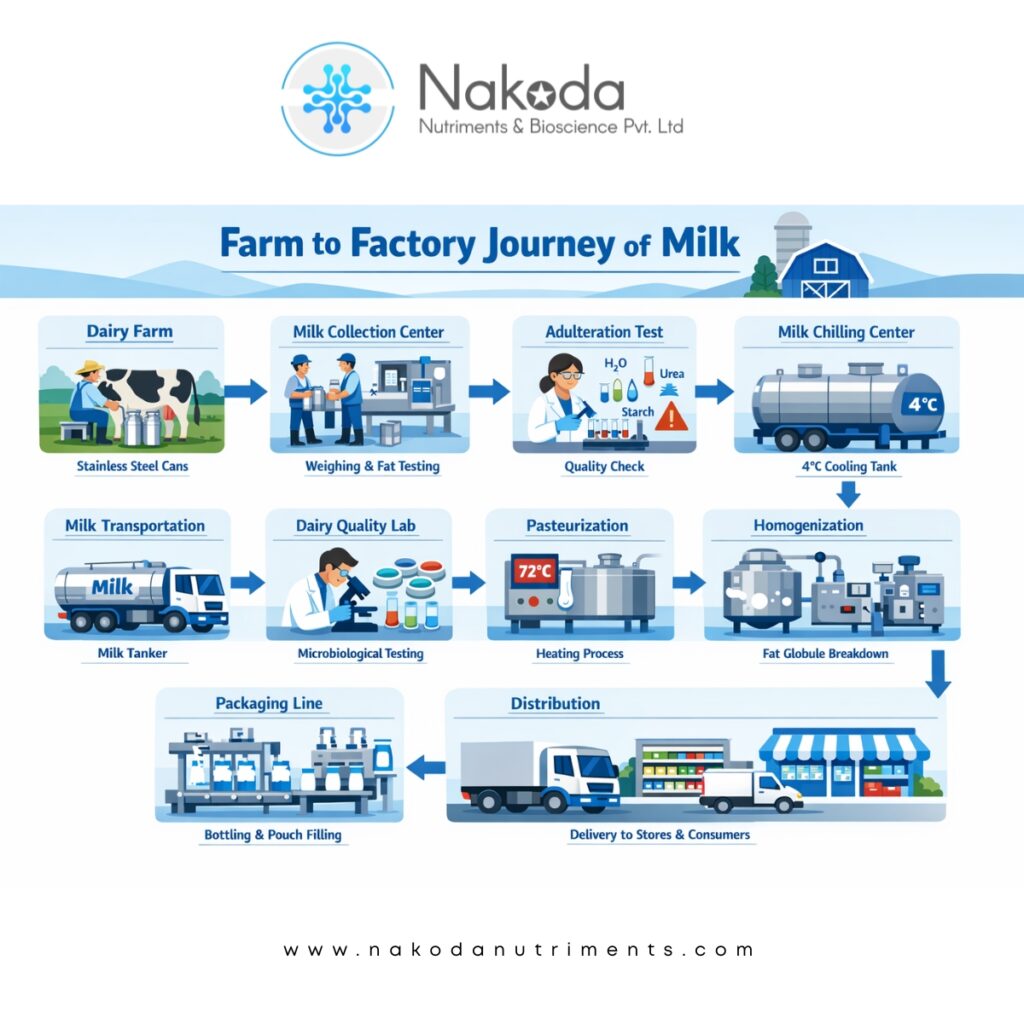
Milk is one of the most essential foods in our daily diet. From a glass of fresh milk in the morning to dairy products like yogurt, ice cream, and cheese, milk plays a vital role in nutrition. But have you ever wondered how milk travels from the farm to your table?
The journey of milk involves several carefully managed steps to ensure quality, safety, and freshness. At the same time, the dairy industry must also guard against a serious issue—milk adulteration.
Let’s explore the complete farm-to-factory journey of milk and understand how quality is maintained at every stage.
1.Milking at the Dairy Farm-he journey of milk begins at the dairy farm. Farmers milk cows or buffaloes using hygienic practices and clean equipment. Modern dairy farms often use milking machines to ensure efficiency and cleanliness.
Maintaining hygiene during milking is extremely important because milk is highly sensitive to contamination. Clean hands, sanitized containers, and healthy animals are essential to produce high-quality raw milk.
2. Milk Collection at Village Centers
After milking, farmers deliver the fresh milk to milk collection centers or dairy cooperatives. At these centers, milk is weighed and basic quality checks are performed.
Common tests include:
- Fat content testing
- SNF (Solids Not Fat) analysis
- Density testing using a lactometer
These tests help determine milk quality and ensure farmers are paid fairly based on the milk composition.
3.Milk Adulteration: A Serious Concern
What is Milk Adulteration?
Milk adulteration refers to the intentional addition of substances to milk to increase its quantity, improve its appearance, or prevent spoilage. These substances may dilute the milk or change its composition, resulting in lower quality milk.
Adulteration usually happens during the milk collection or transportation stages when milk moves from farms to processing plants.
Some common adulterants found in milk include:
- Water – added to increase the quantity of milk
- Urea – used to artificially increase protein readings
- Detergents – added to create foam and maintain whiteness
- Starch – used to increase thickness
Consuming adulterated milk can cause digestive issues, toxicity, and reduced nutritional value. Because of this, dairy companies perform strict adulteration testing at collection centers and processing plants.
4. Milk Chilling and Storage
Once milk passes the initial quality checks, it is quickly transferred to bulk milk cooling tanks. Milk is cooled to around 4°C to slow down bacterial growth.
Rapid chilling is essential because milk is highly perishable. Proper cooling helps preserve the freshness and nutritional quality of milk until it reaches the dairy processing plant.
5. Transportation to the Dairy Plant
After chilling, the milk is transported to the dairy factory in insulated stainless-steel tanker trucks. These tankers are designed to maintain low temperatures and prevent contamination during transportation.
The cold chain is carefully maintained to ensure milk remains fresh during its journey.
6. Quality Testing at the Dairy Factory
Before processing begins, the dairy plant conducts advanced quality testing in specialized laboratories.
These tests include:
- Fat and SNF analysis
- Microbial testing
- Antibiotic residue testing
- Adulteration detection tests
If milk does not meet quality standards, it is rejected immediately. This step ensures that only safe and high-quality milk moves forward for processing.
7. Pasteurization
Pasteurization is one of the most important steps in milk processing. In this process, milk is heated to a specific temperature—typically 72°C for 15 seconds—and then rapidly cooled.
This process kills harmful bacteria while preserving the nutritional value of milk, making it safe for human consumption.
8. Homogenization
Next, milk undergoes homogenization, a process that breaks down fat molecules into smaller particles.
This step prevents cream from separating and ensures the milk has a smooth, uniform texture.
9. Packaging and Distribution
Finally, the processed milk is packed using automated filling machines in pouches, bottles, or cartons. Once packaged, it is distributed to retailers, supermarkets, and consumers through a well-managed cold supply chain.
Within a short time, the milk that started its journey at the farm reaches households ready for consumption.
Why Quality Control Matters in the Dairy Industry
From farm to factory, milk goes through multiple stages of testing and processing to ensure it remains safe, pure, and nutritious. Strict monitoring is especially important to prevent milk adulteration, which can compromise both quality and consumer health.
With modern dairy technology, quality testing, and responsible supply chains, the industry continues to deliver milk products that consumers can trust.
The journey of milk is not just about transportation—it is about maintaining purity, safety, and quality at every step.