



The Complete Guide to Protecting Starter Cultures and Ensuring Consistent Fermentation
Introduction
In dairy manufacturing, successful fermentation is the foundation of high-quality products. Whether producing yogurt, dahi, cheese, cultured butter, or probiotic beverages, manufacturers rely on healthy starter cultures to achieve the desired acidity, texture, flavour, and consistency.
One of the biggest hidden threats to this process is bacteriophages (phages)—viruses that specifically attack the beneficial bacteria used in dairy fermentation. Although invisible to the naked eye, phages can cause delayed fermentation, inconsistent product quality, production downtime, and significant financial losses.
Understanding bacteriophage control is essential for every modern dairy processing plant.
What Are Bacteriophages?
Bacteriophages are naturally occurring viruses that infect bacteria. In dairy applications, they target lactic acid bacteria (LAB) used as starter cultures.
Once a phage enters a bacterial cell, it multiplies rapidly until the cell ruptures, releasing thousands of new phages that infect nearby bacteria. This process can quickly spread throughout an entire fermentation batch, reducing starter culture activity and affecting production performance.
Why Starter Cultures Are So Important
Starter cultures are responsible for several critical functions during dairy fermentation:
-Controlled acidification
-Development of characteristic flavour
-Improved texture and viscosity
-Probiotic functionality
-Gas formation in selected cheese varieties
How Bacteriophages Affect Dairy Production
Even a small amount of phage contamination can create major manufacturing challenges.
Common production issues include:
- Slow acid development
Extended fermentation time
High final pH Weak or inconsistent texture
Reduced flavour development
Moisture imbalance
Poor eye formation in cheese
Batch failures
Increased production downtime
The result is reduced productivity, increased operational costs, and inconsistent product quality.
Common Sources of Phage Contamination
Bacteriophages are naturally present in dairy environments and can enter production through multiple routes, including:
- Raw milk
- Whey
- Airborne aerosols
- Air handling systems
- Water
- Equipment surfaces
- Ineffective Cleaning-in-Place (CIP)
- Operators and personnel movement
- Dust
- Poor hygienic facility design
- Product recycling
Since phages survive for long periods in dairy environments, prevention is much easier than elimination.
Signs Your Dairy Plant May Have a Phage Problem
Watch for these warning signs:
- Longer fermentation cycles
- Reduced acid production
- High final pH
- Variable product texture
- Slow culture activity
- Repeated batch inconsistencies
- Unexpected fermentation failures
- Increased production delays
Routine monitoring helps identify these issues before they impact large-scale production.
Best Practices for Bacteriophage Control
1. Maintain Excellent Cleaning & Sanitation
Effective cleaning removes:
- Milk residues
- Proteins
- Biofilms
- Milk stone deposits
Only after proper cleaning can disinfectants work effectively. A robust CIP program is one of the strongest defences against bacteriophage contamination.
2. Improve Dairy Plant Hygiene
Good Manufacturing Practices (GMP) include:
- Separate raw milk and fermentation areas
- Dedicated culture preparation rooms
- Controlled personnel movement
- Airlocks
- HEPA or sterile air filtration
- Hygienic equipment design
- Independent CIP systems
These measures significantly reduce airborne phage transmission.
3. Monitor Fermentation Performance
Routine monitoring should include:
- Acidification testing
- Starter culture performance
- Environmental sampling
- Air monitoring
- Whey analysis
- Surface hygiene verification
Early detection allows corrective action before production losses occur.
4. Rotate Starter Cultures
Using different compatible starter cultures minimizes continuous exposure of the same bacterial strains to bacteriophages.
Maintaining backup cultures also helps ensure uninterrupted production.
5. Conduct Regular Phage Audits
A comprehensive phage audit reviews:
- Facility layout
- Hygienic design
- Cleaning procedures
- Raw material handling
- Personnel movement
- Culture handling practices
- Internal monitoring systems
Regular audits help identify risks before they become costly production failures.
Why Prevention Is Better Than Recovery
Once bacteriophages become established, they are extremely difficult to eliminate because they:
- Multiply rapidly
- Spread through air and aerosols
- Survive for long periods
- Continuously evolve
- Affect multiple starter cultures
A preventive approach protects fermentation, reduces downtime, and improves production reliability.
How Nakoda Nutriments & Bioscience Supports Dairy Manufacturers
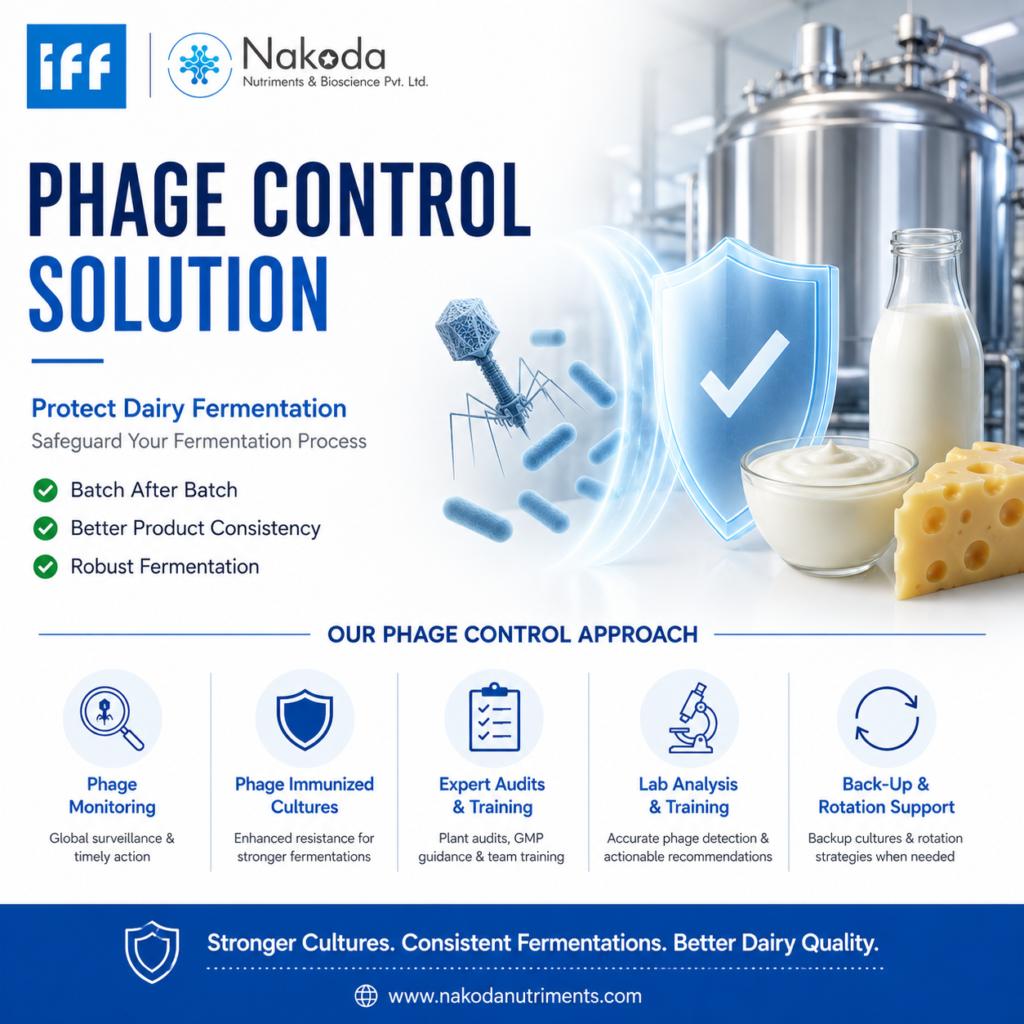
At Nakoda Nutriments & Bioscience Pvt. Ltd., we work closely with dairy manufacturers to improve fermentation performance and product consistency.
Our dairy solutions include:
-Technical assistance for process improvement
-Technical assistance for process improvement
-Premium dairy starter cultures
-Fermentation optimization support
-Technical consultation
-Hygiene and sanitation guidance
-High-quality dairy ingredients
Our objective is to help dairy processors achieve reliable fermentation, minimize production losses, and consistently manufacture premium-quality dairy products.
Final Thoughts
Bacteriophages may be microscopic, but their impact on dairy fermentation can be substantial. Through effective sanitation, hygienic plant design, regular monitoring, and proper starter culture management, dairy manufacturers can significantly reduce phage-related risks. A proactive bacteriophage control program not only protects fermentation but also improves operational efficiency, product consistency, and customer satisfaction.
At Nakoda Nutriments & Bioscience Pvt. Ltd., we are committed to helping dairy manufacturers build safer, smarter, and more reliable fermentation processes.
Looking for expert dairy ingredient and fermentation solutions? Contact Nakoda Nutriments & Bioscience Pvt. Ltd. to discover how our technical expertise and premium dairy solutions can support your manufacturing goals.