




Understanding Membrane Fouling in Dairy Processing: Causes, Impact & Prevention Strategies
Introduction
Membrane filtration technology has become an essential part of modern dairy processing, supporting applications such as milk concentration, whey protein recovery, lactose processing, and water management. Technologies including Ultrafiltration (UF), Microfiltration (MF), Nanofiltration (NF), and Reverse Osmosis (RO) help dairy manufacturers improve product quality and process efficiency.
However, membrane fouling remains one of the most common operational challenges faced by dairy processing plants. The accumulation of proteins, fats, minerals, and microorganisms on membrane surfaces can significantly reduce filtration performance, increase cleaning requirements, and impact overall plant productivity.
Understanding the causes of membrane fouling and implementing effective prevention strategies are essential for maintaining efficient and sustainable dairy operations.
What is Membrane Fouling?
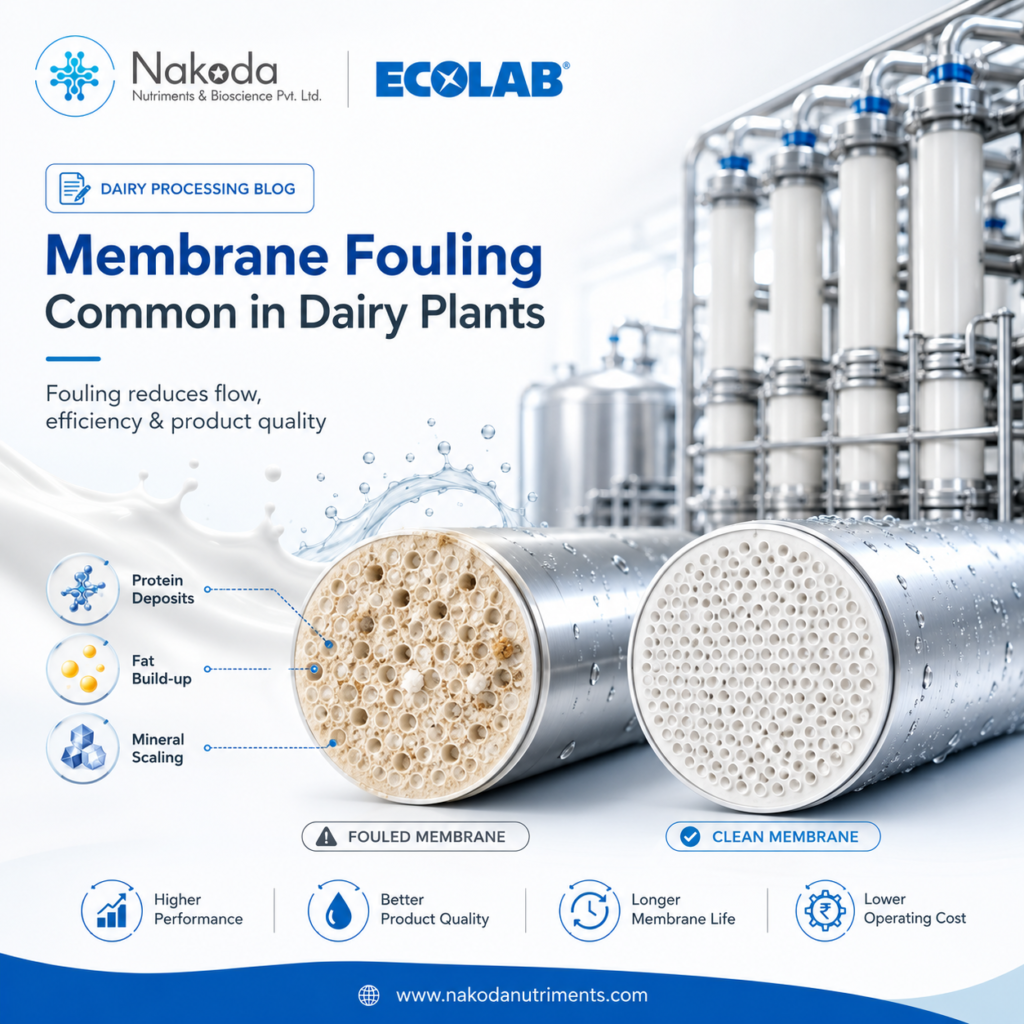
Membrane fouling refers to the unwanted accumulation of materials on the membrane surface or within membrane pores during the filtration process.
During dairy filtration, milk components such as proteins, fats, minerals, and microbial contaminants can deposit on the membrane, forming a fouling layer. This layer increases resistance to filtration and reduces the ability of the membrane to separate components effectively.
Common effects of membrane fouling include:
-Reduced permeate flux
-Increased transmembrane pressure
-Higher energy consumption
-Frequent cleaning requirements
-Reduced membrane lifespan
Why is Membrane Fouling Common in Dairy Plants?
Dairy fluids are complex biological systems containing multiple components that contribute to fouling.
1. High Protein Content
Milk proteins, especially casein and whey proteins, are among the major contributors to membrane fouling. During processing, temperature changes, pH variations, or extended operation can cause protein denaturation and aggregation. These aggregated proteins attach to membrane surfaces and create a resistant fouling layer.
Impact:
Lower filtration efficiency
Reduced permeate flow
Increased CIP frequency
2.Fat Deposition
Milk fat is another major fouling component, especially in applications involving whole milk or cream processing. Fat deposits create a hydrophobic layer on membrane surfaces, reducing membrane permeability and making cleaning more challenging.
Impact:
Reduced membrane performance
Longer cleaning cycles
Higher operating costs
3. Mineral Scaling
Dairy products contain minerals such as calcium and magnesium. Under certain processing conditions, these minerals can precipitate and form scale deposits on membranes.
Impact:
Blocked membrane pores
Increased pressure requirements
Reduced filtration capacity
4. Microbial Fouling
Microbial contamination can lead to biofilm formation on membrane surfaces.
Biofilms are difficult to remove and can negatively impact hygiene performance and product quality.
Impact:
Food safety concerns
Product quality issues
Increased sanitization requirements
Impact of Membrane Fouling on Dairy Processing Efficiency
Membrane fouling affects both operational performance and profitability.
Reduced Production Efficiency
Fouled membranes require higher pressure and longer processing times to achieve the same output.
Increased Operating Costs
Fouling leads to:
Higher energy consumption
Increased water usage
More cleaning chemicals
Additional production downtime
Reduced Membrane Life
Improper cleaning practices and uncontrolled fouling can damage membrane surfaces, increasing replacement frequency and maintenance costs.
Prevention Strategies for Membrane Fouling
1. Effective Pretreatment
Pre -treatment is the first step toward maintaining membrane performance.
Proper pre-treatment helps remove:
-Suspended solids
-Fat particles
-Other contaminants
This reduces the fouling load entering the membrane system.
2. Optimize Processing Conditions
Maintaining optimum:
Temperature
Flow velocity
Pressure
pH conditions
helps minimize deposit formation and improves filtration stability.
3. Regular Membrane Performance Monitoring
Dairy plants should regularly monitor:
Permeate flow rate
Pressure drop
Cleaning frequency
Membrane performance trends
Early detection helps prevent severe fouling.
Role of CIP in Membrane Performance
A well-designed Clean-In-Place (CIP) program is critical for restoring membrane performance.
The right CIP approach depends on the type of fouling
| Fouling Type | Recommended Cleaning Approach |
|---|---|
| Protein deposits | Alkaline cleaning |
| Mineral scaling | Acid cleaning |
| Fat deposits | Specialized cleaning chemistry |
| Microbial contamination | Sanitization |
Ecolab Ultrasil™ Membrane Cleaning Solutions
Advanced membrane cleaning solutions such as Ecolab Ultrasil™ membrane care products help dairy processors effectively manage fouling challenges.
A properly optimized CIP program can help:
✅ Remove protein and organic deposits
✅ Control mineral scaling
✅ Restore membrane permeability
✅ Improve filtration efficiency
✅ Extend membrane lifespan
✅ Reduce production downtime
The combination of correct cleaning chemistry, optimized cleaning parameters, and regular monitoring ensures reliable membrane operation.
Conclusion
Membrane fouling is a major challenge in dairy processing, but it can be effectively controlled through proper pre-treatment, optimized process conditions, regular monitoring, and advanced CIP practices.
By implementing a scientific membrane care strategy with solutions such as Ecolab Ultrasil™ membrane cleaning technology, dairy plants can improve productivity, reduce operating costs, and achieve consistent filtration performance.
Nakoda Nutriments & Bioscience Pvt. Ltd. provides advanced Ecolab CIP and hygiene solutions to support dairy industries in achieving efficient, safe, and sustainable processing operati
ons.
.